The regular visitors to your bird feeders don’t have the ability or inclination to migrate to some place warmer when winter arrives, but they do have various techniques that help them survive the cold days and nights.
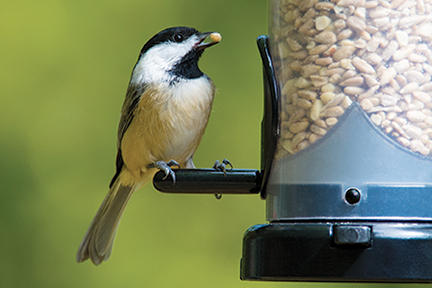
Unlike us, birds cannot put on more layers to stave off lower temperatures. You may observe them puff up their feathers to create air pockets, which in turn increases the insulating value of their plumage. They’ll also stand on one leg and have the other retracted close to their body for warmth. If you notice a bird ruffling their whole body, it may be that they’re shivering. Any physical activity helps them to warm up and each of these actions requires energy, and for that they need food. That’s where you come in. Providing a variety of foods such as seed, suet, peanuts, fruit, and mealworms at this time of year can be vital to a bird’s survival.
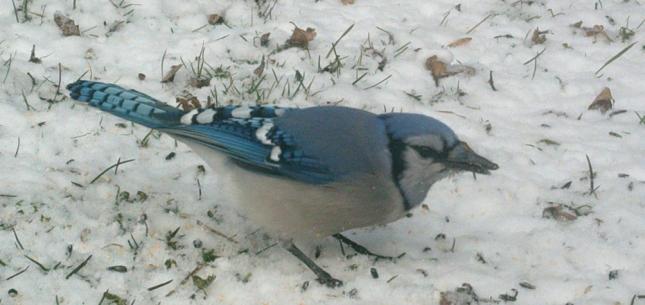
Lingering snow and ice affect birds greatly. Any natural foods they eat or open areas where they could land are covered in a layer of snow. Birds will in turn depend on what they can find above the snow. That’s one reason why you see so many blackbirds after a snowfall. Species like Grackles, Redwings, and Starlings flock up in winter. They usually find food in old farm fields. When the ground is covered, they swarm any food station above the snow, your feeders being one of the few sources.
Flocking up can help a bird get through winter. A flock of birds in a bush is warmer than a single bird. Foods are easier to find when a flock is looking for it. Flocks also offer a measure of protection from predators such as hawks.
Natural water sources tend to freeze over or evaporate when it’s very cold. A heated birdbath might be the only place for birds and wildlife to get water. Squirrels and foxes sip from our heated birdbath. A simple way to keep water from freezing is to place a brick or a rock painted black into a birdbath. The darker surface and masonry contents will warm up in the sunlight.
Nighttime is when birds seek out a place of shelter. Some birds retreat into evergreens. While others spend the night roosting in a birdhouse. Downy Woodpeckers and Bluebirds have been observed sleeping in our boxes. Four walls and a roof offer protection from the frigid night. I left the door open to our shed and the Wrens and Cardinals roost in the rafters.
This winter has some extreme conditions. Heavy snow, a layer of ice, and the forecast for cold temperatures put the birds in a precarious situation. Now is when they will rely on you most. Remember birds don’t eat snow.